Perimenopause Support in Niagara
Nutrition, Hormones, Weight Gain & Fatigue
Does It Feel Like Your Body Has Changed Overnight?
You’re eating pretty much the same way you always have. Or maybe even a little less now.
You might even be exercising more. Or eating more protein.
And, somehow the scale keeps creeping up or you don’t recognize or like the version of yourself that you see in the mirror. You wonder how this happened.
Maybe your sleep isn’t what it used to be or want you’d like it to be. You wake up at 3 a.m. staring at the ceiling. Your patience feels shorter. Your energy feels lower. The brain fog is real. The crashes in mood are no joke. Tears form easily. And some days it feels like you should just accept this is part of getting older.
If you've found yourself wondering:
Why am I gaining weight when I’m doing everything right?
You're not alone, my friend.
And you’re not imagining that things have changed.
Many women begin noticing these changes during perimenopause, the transitional years leading up to menopause when hormones begin to fluctuate and the body starts asking for a different kind of support.
The frustrating part is that what worked in your 20s, 30s, and even early 40s often stops working.
The good news?
There isn’t something wrong with you.
Your body is changing.
And while that may not feel particularly comforting when your jeans don’t fit, you’re sweating through the sheets at 3 a.m., and you’ve forgotten why you walked into the kitchen, understanding what’s happening can be incredibly empowering.
Because once you understand the changes taking place beneath the surface, you can stop fighting your body and start working with it.
Perimenopause: Puberty's Moodier Twin
If menopause is where you’ll end up, then perimenopause is the winding, hilly road that gets you there.
Perimenopause is the transitional phase leading up to menopause and can last anywhere from a few years to more than a decade.
I often think of perimenopause as puberty’s moodier, wiser twin who shows up uninvited, drinks your good wine, rearranges all your furniture, and steals your precious things. It can be wildly inconvenient at times, but it also asks us to pay attention, adapt, and perhaps finally start listening to ourselves in a deeper way.
Perimenopause doesn’t arrive with fanfare or flashing lights. It usually arrives quietly, leaving little clues along the way… irregular cycles, night sweats, mood swings, sleep disturbances, and maybe a new layer of fluff around the middle that no amount of kale seems to budge.
For me, it felt like playing a frustrating game of hormonal whack-a-mole. Just when I thought I was done with my period after six months of bliss, bam, it showed up again. What the heck happened?
Those unpredictable moments weren’t random. They were signposts reminding me that my body was changing and asking for my attention.
Emotionally, perimenopause can feel like a rollercoaster you never agreed to ride. There can be grief for what feels like it’s ending: reproductive years, predictable cycles, boundless energy, and the sense of certainty you once had about your body.
But alongside that grief, there is often something else developing too. A little more wisdom. A little more freedom. And perhaps an invitation to care for yourself differently than you have before.
The symptoms may feel frustrating, but they are often clues. Your body isn’t betraying you. It’s communicating with you.
Learning to listen rather than fight can make this transition feel far less overwhelming.
What Is Perimenopause?
Perimenopause is the natural transition leading up to menopause. While menopause is officially defined as going 12 consecutive months without a menstrual period, perimenopause can begin several years earlier and is often when women notice the most significant changes.
For some women, perimenopause begins in their late 30s, although it most commonly starts in the 40s. During this phase, estrogen and progesterone levels begin to fluctuate, sometimes dramatically. Unlike menopause, where hormone levels settle into a new normal, perimenopause can feel unpredictable because hormone levels are constantly shifting.
This is often why symptoms seem to come and go without warning.
One month you feel like yourself.
The next month you’re wondering why you’re suddenly exhausted, waking up at 3 a.m., craving sugar, feeling anxious, or gaining weight despite doing all the things that used to work.
While hormones are certainly part of the story, they aren’t the whole story.
Blood sugar balance, stress, sleep quality, gut health, inflammation, nutrient status, muscle mass, and metabolic function can all influence how you experience perimenopause.
https://purenaturalhealth.ca/master-your-metabolism/This is why two women of the same age can have completely different experiences.
While some women experience only mild symptoms, others struggle with weight gain, fatigue, brain fog, sleep issues, hot flashes, anxiety, or significant mood changes.
Understanding what’s happening beneath the surface can help you stop guessing and start giving your body the support it’s actually asking for.
Common Signs and Symptoms of Perimenopause
Perimenopause can show up differently for every woman. Some experience only a few mild symptoms, while others feel like their body has become unfamiliar overnight.
Common signs and symptoms of perimenopause include:
- Weight gain, particularly around the abdomen
- Increased belly fat despite healthy eating
- Fatigue or low energy
- Brain fog and difficulty concentrating
- Mood swings or irritability
- Anxiety or feeling more overwhelmed than usual
- Poor sleep or waking during the night
- Night sweats and hot flashes
- Irregular periods
- Heavier or lighter menstrual flow
- Increased cravings for sugar or carbohydrates
- Changes in digestion or bloating
- Joint aches and stiffness
- Reduced stress resilience
- Lower libido
- Feeling less motivated or less like yourself
One of the most common things I hear from women is: "I don't feel like myself anymore."
And that’s often what makes perimenopause so challenging.
It’s not just the physical symptoms. It’s the frustration of doing everything you’ve always done and not getting the same results.
The body you’ve trusted for decades suddenly seems to have different rules.
The good news is that these symptoms are not random.
They’re often valuable clues that your body is asking for support.
When we look at the bigger picture—including hormones, blood sugar balance, metabolism, stress, sleep, digestion, and lifestyle habits—we can often uncover why symptoms are happening and identify practical ways to help you feel more like yourself again.
Why Am I Gaining Weight During Perimenopause?
If you’re gaining weight during perimenopause, especially around your midsection, you’re not alone.
In fact, it’s one of the most common reasons women reach out to me.
What makes it particularly frustrating is that many women feel like they’re doing all the “right” things and getting none of the results they used to get.
Yet the scale continues to climb.
The first thing I want you to know is this:
- It's not simply a lack of willpower.
- And it's not because you're getting older.
- Perimenopause creates a perfect storm of changes that can make weight management more challenging.
Hormones Are Changing
During perimenopause, estrogen and progesterone begin to fluctuate. These shifts can influence where the body stores fat, how hungry you feel, how well you sleep, and how resilient you are to stress.
Many women notice that weight that once settled evenly throughout the body now seems to gather around the abdomen.
While hormones play a role, they are only one piece of the puzzle.
Blood Sugar Becomes More Important Than Ever
In my experience, this is one of the biggest pieces women overlook.
When blood sugar rises and falls dramatically throughout the day, the body releases more insulin. Insulin is a storage hormone, and chronically elevated insulin levels can make fat loss much more difficult.
Signs that blood sugar may be playing a role include:
-
Sugar cravings
-
Afternoon energy crashes
-
Feeling hungry shortly after eating
-
Increased belly fat
-
Difficulty losing weight despite eating less
This is one reason why simply cutting calories often doesn’t work.
The quality and balance of your meals matters.
If you’d like to better understand how blood sugar influences metabolism and weight loss, it’s one of the foundational principles I teach inside Master Your Metabolism.
Stress Can Keep Your Body Stuck
Many women enter perimenopause while juggling careers, aging parents, relationships, financial responsibilities, and growing families.
It’s a lot.
When stress becomes chronic, the body produces more cortisol. Elevated cortisol can affect blood sugar regulation, increase cravings, interfere with sleep, and encourage fat storage around the midsection.
This doesn’t mean stress is “all in your head.”
It means your nervous system and metabolism are deeply connected.
Poor Sleep Changes Everything
If you’ve found yourself waking at 2 or 3 a.m., struggling to fall asleep, or feeling exhausted despite spending enough hours in bed, you’re not imagining it.
Sleep disruption is common during perimenopause. I’ve lost count of the number of women who tell me they’re awake at 3 a.m. solving the world’s problems.
Unfortunately, poor sleep can increase hunger hormones, reduce satiety hormones, worsen cravings, lower energy, and make it harder to make supportive food choices.
When sleep suffers, weight loss often becomes more challenging.
Loss of Muscle Mass Can Slow Metabolism
Beginning in our 30s and accelerating during midlife, women naturally begin losing muscle mass unless steps are taken to maintain it.
Muscle is metabolically active tissue. In simple terms, it helps us burn energy more efficiently.
When muscle mass decreases, metabolism can become less efficient, making it easier to gain weight and harder to lose it.
This is one reason why adequate protein and strength training become increasingly important during perimenopause.
It's Rarely Just One Thing
Most women are looking for the one thing causing the weight gain. The reality is it’s usually not one thing. It’s several small things stacking on top of each other over time.
The reality is that weight gain during perimenopause is often the result of several factors working together:
- Hormonal fluctuations
- Blood sugar imbalances
- Chronic stress
- Poor sleep
- Loss of muscle mass
- Inflammation
- Digestive challenges
- Nutrient deficiencies
This is why quick fixes rarely work for long.
The good news is that when we take a comprehensive approach and look at what your body is trying to tell us, weight loss often becomes less of a battle.
My goal isn’t simply to help women lose weight. It’s to help them understand why the weight arrived in the first place so we can address the underlying factors that may be contributing to it.
What I’ve found is that when we stop obsessing over the number on the scale and start paying attention to what’s driving it, things often begin to shift.
Energy improves. Cravings settle down. Sleep gets better. Women start feeling more like themselves again.
And interestingly, that’s often when the weight starts responding too.
Why Am I So Tired During Perimenopause?
If fatigue during perimenopause has you wondering whether you’re lazy, unmotivated, or somehow doing something wrong, let me reassure you: you’re not.
Many women tell me they’re exhausted but can’t seem to slow down. They drag themselves out of bed, rely on caffeine to get moving, push through the day, collapse onto the couch at night and then can’t figure out why they can’t sleep.
Others find they no longer have the energy they once had for exercise, socializing, or even getting through the day without relying on caffeine.
While fluctuating hormones can certainly contribute, fatigue during perimenopause is rarely caused by hormones alone.
Poor sleep, blood sugar imbalances, chronic stress, nutrient deficiencies, inflammation, thyroid dysfunction, digestive issues, and an overloaded nervous system can all play a role.
The challenge is that most women do what they’ve always done: push harder, drink another coffee, and hope tomorrow will somehow feel different.
Your body may be asking for something different than it did ten or twenty years ago.
The good news is that fatigue is often a clue, not a life sentence. When we identify what’s contributing to low energy and support the body appropriately, many women experience significant improvements in energy, focus, motivation, and overall wellbeing.
How Perimenopause Affects Metabolism
Many women blame themselves when they gain weight during perimenopause. They often assume they’re doing something wrong when in reality the rules of the game have changed.
They assume they’ve lost willpower or simply aren’t trying hard enough.
The truth is that perimenopause can affect metabolism in several ways.
Hormonal fluctuations can influence appetite, cravings, blood sugar regulation, sleep quality, muscle mass, and how efficiently the body uses energy.
At the same time, women are often navigating increasing stress, busy schedules, and years of accumulated wear and tear on the body.
This is why the old advice to simply “eat less and exercise more” often falls short.
A healthy metabolism is about much more than calories.
It’s influenced by hormones, digestion, inflammation, blood sugar balance, sleep quality, stress resilience, and muscle mass.
Supporting metabolism during perimenopause requires a whole-body approach rather than focusing solely on the number on the scale.
How Blood Sugar Affects Perimenopause Symptoms
Blood sugar balance is one of the most overlooked factors affecting how women feel during perimenopause.
Most women are looking for a hormone problem while completely overlooking what their blood sugar is doing all day long.
When blood sugar rises and falls dramatically throughout the day, it can contribute to:
- Cravings
- Energy crashes
- Irritability
- Anxiety
- Brain fog
- Increased hunger
- Poor sleep
- Weight gain
Many women assume these symptoms are entirely hormonal when blood sugar may be playing a significant role.
One of the simplest ways to support hormones during perimenopause is to create more stable blood sugar throughout the day.
This often includes eating balanced meals with adequate protein, healthy fats, fibre-rich vegetables, and spacing meals appropriately rather than grazing throughout the day.
When blood sugar becomes more stable, women often notice improvements in energy, mood, cravings, sleep, and weight management.
This whole-body approach is at the heart of my Master Your Metabolism program.
Stress, Cortisol and the Nervous System
Perimenopause often arrives during one of the busiest and most demanding seasons of life.
Many women are balancing careers, aging parents, relationships, financial responsibilities, and children who still need them in various ways.
That’s a lot for any nervous system.
Chronic stress can increase cortisol production and contribute to poor sleep, increased cravings, blood sugar imbalances, inflammation, fatigue, and weight gain around the midsection.
This doesn’t mean stress is “the cause” of everything.
However, it does mean that your nervous system plays a much bigger role in your health than many people realize.
I often remind clients that we can’t heal in the same state that helped us survive.
Supporting the nervous system through rest, recovery, movement, boundaries, breathwork, mindfulness practices, and self-care can have a profound impact on how the body responds during perimenopause.
If you’re looking for a gentle place to begin, you can download my complimentary Nervous System Reset from my Resource Library.
Nutrition Tips for Perimenopause
While every woman is unique, there are several foundational strategies that tend to support health and hormone balance during perimenopause.
Prioritize Protein
Protein helps support muscle mass, blood sugar stability, satiety, and metabolism. Many women benefit from increasing protein intake, particularly at breakfast.
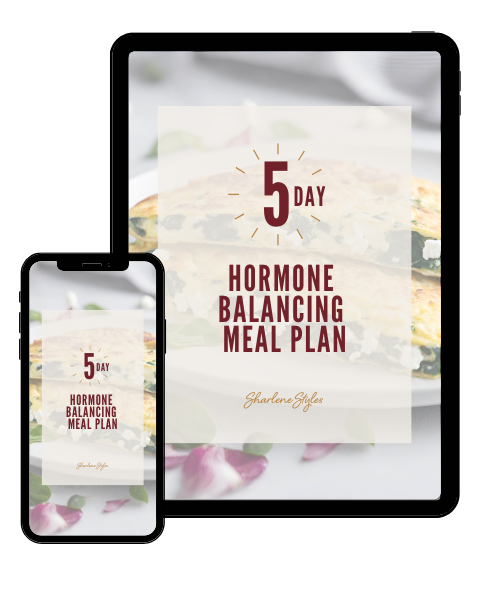
Not sure where to start? Download my complimentary 5-Day Meal Plan.
Focus on Whole Foods
Most women don’t need another extreme diet.
They need a way of eating that supports blood sugar balance, hormones, energy, muscle mass, and real life.
That’s exactly what I teach inside Master Your Metabolism.
Support Blood Sugar Balance
Eating balanced meals that include protein, healthy fats, and vegetables can help reduce cravings and support more stable energy throughout the day.
Stay Hydrated
Hormonal changes can make women more susceptible to dehydration, which can contribute to fatigue, headaches, and poor concentration.
Don't Forget Strength Training
Nutrition and movement work together. Maintaining muscle mass becomes increasingly important during midlife and can support metabolism, strength, and healthy aging.
Most importantly, avoid extreme diets that leave you feeling deprived, exhausted, and frustrated.
Perimenopause is often a time when the body responds best to nourishment rather than restriction.
Can Lab Testing Help During Perimenopause?
Sometimes symptoms tell us a lot.
Sometimes they’re only part of the story.
Sometimes we need to look a little deeper.
Lab testing can help uncover factors that may be contributing to symptoms such as fatigue, weight gain, poor sleep, brain fog, cravings, and difficulty losing weight.
Depending on the individual, testing may provide insights into:
- Blood sugar regulation
- Inflammation
- Thyroid function
- Iron status
- Nutrient deficiencies
- Metabolic function
The goal isn’t to chase perfect numbers.
The goal is to gather meaningful information that helps us understand what your body may need and create a more personalized plan moving forward.
Working With a Perimenopause Nutritionist in Niagara

Perimenopause can feel overwhelming when you’re trying to figure everything out on your own.
The internet is filled with conflicting advice, and what works for one woman doesn’t always work for another.
I’ve never been interested in simply handing women a meal plan and sending them on their way.
I’m interested in helping them understand why their body is responding the way it is in the first place.
Through my Master Your Metabolism program, my approach is to look at the whole picture.
Rather than focusing solely on symptoms, we explore the underlying factors that may be contributing to how you’re feeling.
Together we look at areas such as:
- Hormone health
- Blood sugar balance
- Metabolic function
- Digestion and gut health
- Stress and nervous system regulation
- Sleep
- Lifestyle habits
My goal is to help you better understand your body, feel empowered in your choices, and create a sustainable path toward more energy, better sleep, improved confidence, and a healthier relationship with food.
If you’re struggling with weight gain, fatigue, cravings, brain fog, poor sleep, or other symptoms of perimenopause, I’d love to help.
Or, if you’re not quite ready to work together, explore my complimentary Resource Library first.
Book a complimentary Metabolic Assessment and let's explore what your body may be trying to tell us.
Frequently Asked Questions
How long does perimenopause last?
Perimenopause can last anywhere from a few years to over a decade. Most women begin noticing changes in their 40s, although some experience symptoms earlier.
What age does perimenopause start?
Many women enter perimenopause in their 40s, but symptoms can begin as early as the mid-to-late 30s.
Can perimenopause cause weight gain?
Yes. Hormonal fluctuations, changes in insulin sensitivity, increased stress, poor sleep, and loss of muscle mass can all contribute to weight gain during perimenopause.
Why am I gaining weight around my belly during perimenopause?
Declining estrogen, increased cortisol, blood sugar imbalances, and changes in body composition can contribute to increased abdominal fat during perimenopause.
Can I lose weight during perimenopause?
Absolutely. While the approach may need to change, many women successfully lose weight during perimenopause by focusing on blood sugar balance, protein intake, stress management, sleep, and strength training.
Why am I so tired during perimenopause?
Fatigue during perimenopause can be influenced by hormonal changes, sleep disturbances, stress, blood sugar imbalances, thyroid issues, nutrient deficiencies, and inflammation.
Can perimenopause cause anxiety?
Yes. Fluctuating hormone levels can affect mood and stress resilience, making anxiety more common during perimenopause.
What foods should I eat during perimenopause?
Most women benefit from focusing on protein-rich foods, vegetables, healthy fats, fibre, and whole foods while minimizing highly processed foods and excessive sugar.
Can nutrition help with perimenopause symptoms?
Nutrition can play a significant role in supporting energy, mood, sleep, blood sugar balance, digestion, weight management, and overall wellbeing during perimenopause.
Should I have lab testing done during perimenopause?
Lab testing may help identify underlying contributors such as blood sugar dysregulation, inflammation, thyroid issues, iron deficiency, or other factors affecting your health.
Do you work with women in menopause as well as perimenopause?
Yes. I work with women throughout midlife, including perimenopause, menopause, and post-menopause.
Do you offer virtual appointments?
Yes. I work with clients throughout Niagara, Ontario, and beyond through virtual consultations and coaching.
What's the difference between perimenopause and menopause?
Perimenopause is the transitional phase leading up to menopause when hormone levels begin to fluctuate and symptoms often appear. During perimenopause, women may experience irregular periods, weight gain, fatigue, poor sleep, mood changes, hot flashes, brain fog, and other symptoms.
Menopause is officially reached when you’ve gone 12 consecutive months without a menstrual period. While symptoms can continue after menopause, many women find the hormonal rollercoaster of perimenopause is often the most unpredictable stage of the journey.
Why does everything I used to do stop working during perimenopause?
This is one of the most common frustrations I hear from women.
During perimenopause, changes in hormones, metabolism, blood sugar regulation, stress resilience, sleep quality, and muscle mass can all influence how your body responds to food, exercise, and lifestyle habits.
The strategies that worked in your 20s, 30s, or even early 40s may no longer produce the same results.
This doesn’t mean you’ve failed or that your body is broken. It simply means your body is changing and may need a different kind of support. Often, focusing on blood sugar balance, adequate protein, stress management, sleep, strength training, and overall metabolic health can be far more effective than trying to eat less and exercise more.
Ready to Feel Like Yourself Again?
Perimenopause doesn’t have to be something you simply endure. If you’re ready to better understand what your body is asking for and explore a personalized approach, I’d love to help.
Not quite ready? Explore my complimentary Resource Library.